OpenAI pays an average of $1.5 million in stock to each employee. Seven times more than Google before its IPO. Eighteen times the tech industry average. And yet, more than 50 research leaders have walked out the door in two years. If the most cash-rich company in the sector can't retain talent by throwing money at the problem, your "we don't have the budget" excuse just ran out of arguments.

TL;DR: The no-fluff summary
- $1.5M per head: OpenAI was paying record stock compensation and still lost 25% of its research leaders in two years.
- The three real factors: MIT Sloan is clear: autonomy, growth opportunities, and the relationship with leadership. Not salary.
- The budget alibi: "They left for the money" is what people say when they don't want to look in the mirror.
- 63% leave due to stagnation: according to Pew Research, lack of advancement opportunities is the most cited reason for quitting.

The OpenAI case is something else. For anyone who thinks people should just show up, do the work, collect a paycheck, and be grateful, or that a small pay bump is all it takes to keep someone motivated, think again. Work goes far deeper than that. Motivation and company culture are not things you manufacture with money. And if you need proof, look at a company that has all the money in the world, all the prestige, all the spotlight. And it's still watching its stars walk out the door.
DaniIn this article
Why Would Someone Earning $1.5 Million Walk Away?
Because money keeps people around during the vesting period. After that, if the job isn't making you better, you leave. The number doesn't matter.
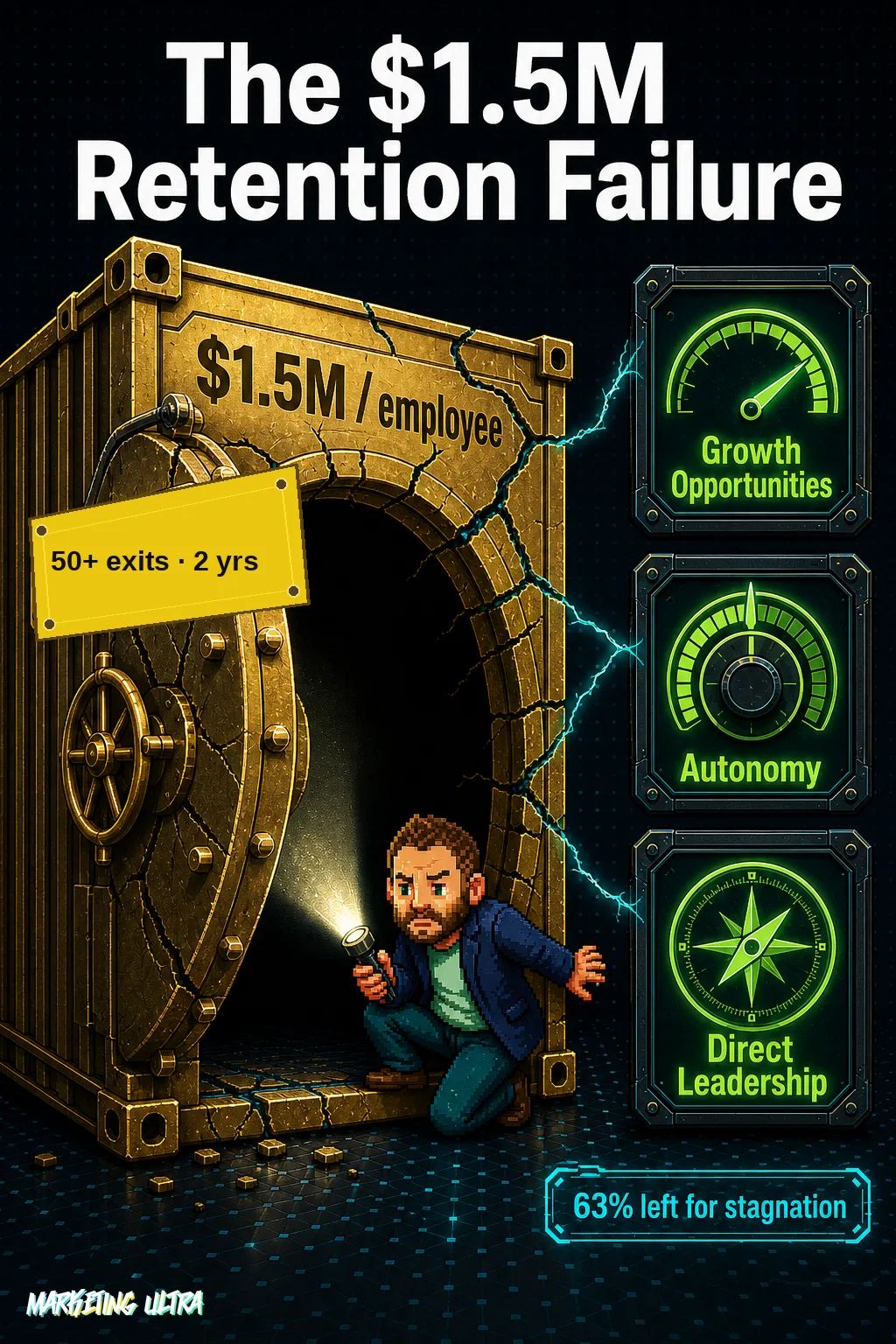
OpenAI's figures are staggering. According to data from Equilar cited by NCEO, the average stock compensation per employee ahead of the IPO was $1.5 million, seven times what Google paid in 2004, and eighteen times the inflation-adjusted industry average.
A PitchBook analysis confirms that more than 25% of its research leaders have left the company in the past two years, over 50 key people. The bleed hasn't stopped: chief revenue officers, heads of operations, profiles that had every reason to stay. And Meta, meanwhile, has been poaching their researchers with packages that make those $1.5 million look like pocket change.
So why were they leaving? Disagreements over the company's direction. Burnout from 80-hour weeks. Researchers "pushed into product" when they wanted to do research. Ethical concerns around safety.
When someone walks away from $1.5 million over a difference in vision or burnout, the problem is what you're selling, not what you're paying.
The Three Factors That Actually Retain Talent (None of Them Is Pay)
Growth opportunities, autonomy, and a direct relationship with leadership. Those are the three factors that MIT Sloan research identifies as the real drivers of retention, ranking above salary.
A Pew Research survey found that 63% of people who quit their jobs in 2021 did so because of a lack of advancement opportunities. Two out of three. McKinsey confirmed it in 2022 as the most common reason for resignations. Hard data.
How many managers do you know who actually let their teams make decisions? Few. MIT Sloan talks about moving from command-and-control to distributed leadership, giving people genuine room to innovate and decide. When the work challenges you, it pays more than the paycheck.
Then there's the most basic thing, and the most overlooked: feeling like someone actually cares. Not the "my door is always open" line straight out of the HR playbook. Someone actually sitting down to ask how you're doing and whether the job is helping you grow. Researchers call it a "direct relationship with leadership." In plain terms, it just means your manager knows who you are.
All three have something in common: they cost nothing. They just require attention, and a decision to stop managing people like rows in a spreadsheet.
Budget as an Alibi
This is where things get uncomfortable. Especially for those of us who manage teams.

A lot of managers hide behind the salary narrative. "They left for the money." "I can't compete with those offers." Convenient. If the team leaves for money, it's the market's fault, not yours.
Wrong.
It's the same logic I lay out in the piece on AI as a manager's alibi: find an external scapegoat so you don't have to look in the mirror.
I'd bet most people who leave an agency don't do it for an extra $200 a month. They leave because they've spent a year doing the same thing without anyone asking what they want to do, while their manager doesn't even know what project they're on. They were sold growth. They found inertia.
If that profile sounds familiar, you probably have an accidental manager somewhere in the chain.
An agency actually has an ADVANTAGE over Silicon Valley on two of those three factors. Direct access to leadership and fast-track growth opportunities, without the layers of middle management or the 18-month promotion cycles of a big tech company.
The problem is that most agencies squander that advantage. They have the access but don't use it. They have the flexibility to promote quickly but default to a flat structure where nobody moves up. And so they lose the people who want to grow. Which is exactly the people you want to keep.
Retaining talent means building a place where people actually want to stay, something I dig into in the guide on managing teams through trust.
When was the last time you asked someone on your team whether they feel like they're growing?
If you can't remember, you already have your answer. You can pay whatever you want: if people aren't growing and nobody cares whether they show up, they'll leave. Every time.