Picture someone walking into the team cold. No questions. No onboarding. They sit down, read two years of Slack conversations, and by day three they know your client better than your most seasoned account manager.
That's Claude Tag. And Anthropic just launched it.

TL;DR: The no-BS rundown
- Continuous learning, not one-shot RAG: Claude Tag indexes your Slack conversations in real time and builds cumulative context. It doesn't search when you ask, it already knows.
- Marketing without onboarding: brand voice, campaign history, and past decisions, available to any team member from day one.
- The real cost isn't just money: your internal conversations (including sensitive ones) flow through external servers. And most teams enable it without reading the fine print.
In this article
What Claude Tag is (and why it's not just another Slack chatbot)
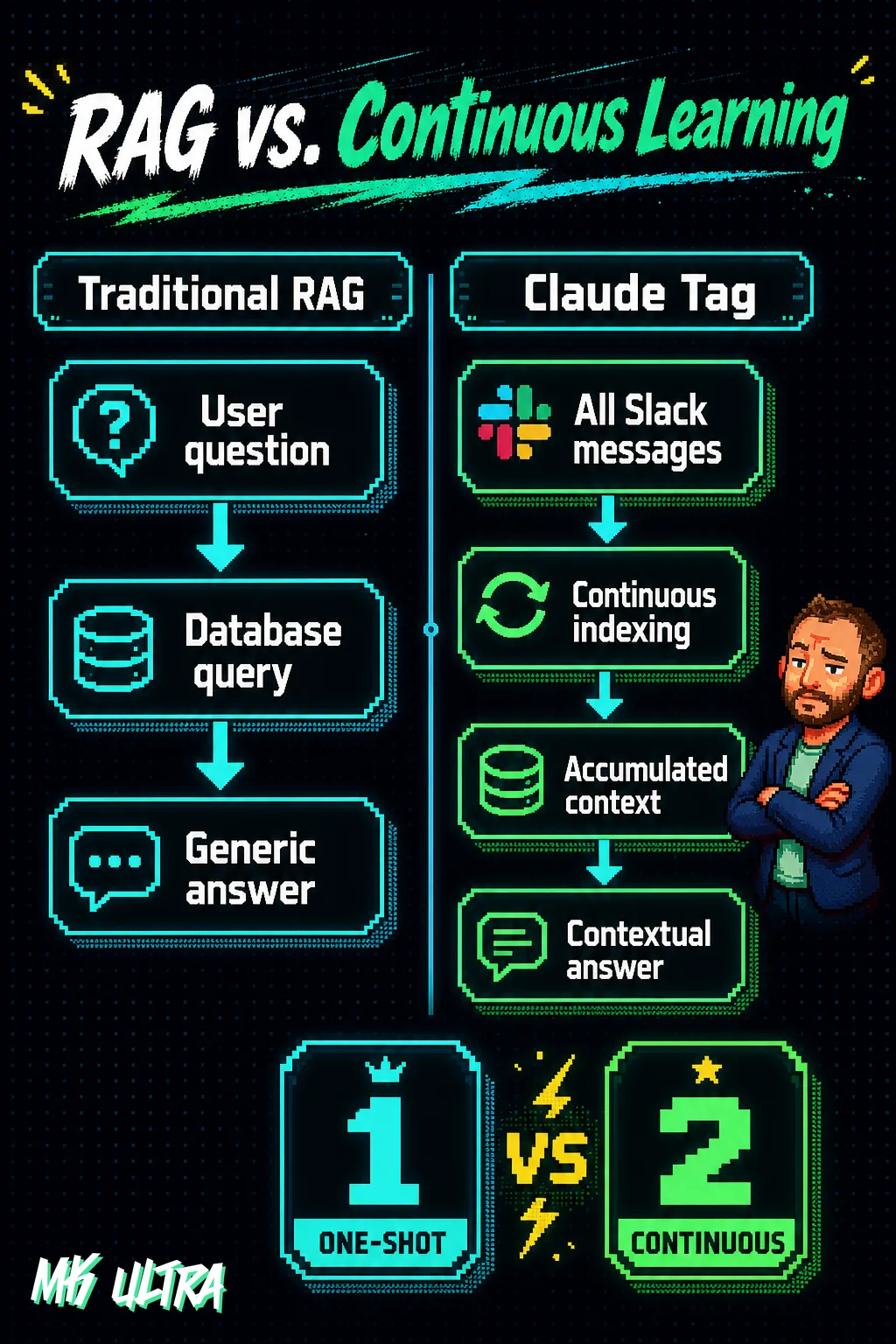
Claude Tag is an Anthropic AI assistant that integrates with Slack and continuously learns your company's context through channel messages. Forget the typical bot that rummages through a PDF when you ask it something. This one indexes conversations and builds an increasingly accurate picture of your business, how your team actually operates.
The key word is “continuously.” As TechCrunch reports, Claude Tag doesn't do one-shot RAG (querying a database when someone asks a question). It's processing your workspace's full conversation stream: internal naming conventions, cross-department dynamics, why that call was made four months ago. The difference between Googling something and having someone who's been sitting in your office for three months, quietly absorbing everything.
For a marketing team, the pitch is blunt: an assistant that already gets your brand voice, knows your clients by name, and remembers why you killed that paid campaign six months ago. No 400-word prompt to set the scene every single time.
What your marketing team can actually do with Claude Tag
If your team already lives in Slack, you don't need to stretch very far:
- Context without alignment meetings. Claude Tag has read the threads where strategy was defined, the last-minute pivots, and the client feedback. It saves you the “let's all get on the same page” meeting that nobody wants but everyone schedules.
- Real onboarding. The new hire doesn't have to depend on the colleague who “knows everything” (and isn't always in the mood to explain it). Claude Tag is that colleague, available at 3am and without the attitude.
- Consistent brand voice. If your team has been talking about a product in a specific way in Slack for months, the AI has absorbed it. On-brand drafts with zero briefing, ready to go.
- Decision archaeology. “Why did we stop bidding on that keyword?” Instead of digging through Slack (which is like searching for a needle in a haystack of GIFs and reaction emojis), Claude Tag traces the thread where that call was made and hands you the full context.
The real point: the AI knows about you, not about everything and nothing. In marketing, where context is EVERYTHING, that's the difference that matters. And it connects to what we're already seeing with AI agents applied to campaigns: the AI that actually delivers is the one that understands who it's writing for, not the one that writes most fluently.
The elephant in the room: your conversations are feeding an external model
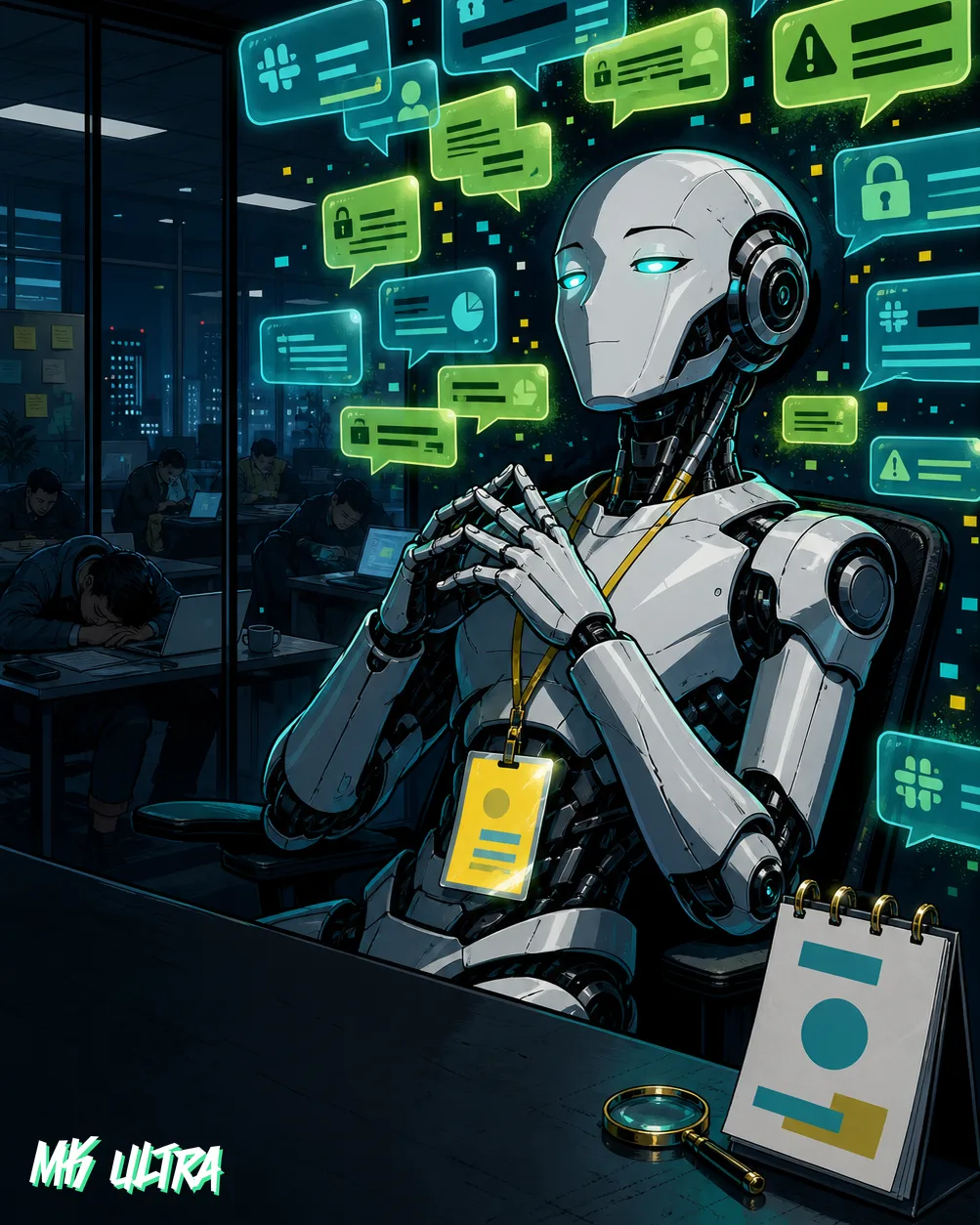
And here's the part early adopters are cheerfully ignoring.
For Claude Tag to learn your context, it needs to read your conversations. All the ones you give it access to. The strategy threads, the channel where people vent about difficult clients, the message someone dropped one Friday at 7pm that really shouldn't have been sent.
We're talking about “continuous indexing.” Not a one-time snapshot taken at installation. Every message in an enabled channel flows through Anthropic's servers. A constant stream.
Anthropic says that data doesn't train their general models. Fine, let's take them at their word. But even so (and I'd wager most teams accept the terms without reading them), the uncomfortable questions don't go away:
Who inside your company decides which channels feed Claude Tag? The CTO? The Slack admin? The intern who rushed through integrations one Tuesday afternoon?
What happens with sensitive conversations, vendor negotiations, client data, internal performance discussions, that end up in “work” channels out of sheer habit?
To be clear: Claude Tag could be perfectly secure. But the pace of adoption doesn't match the pace of reflection. And when you're handling third-party data, that's not a minor footnote.
And it's not just Anthropic. Meta just launched its own AI app for creators. The pattern is clear: big tech wants to be INSIDE your workflow, not alongside it. And when something is inside, you set the rules, until you stop setting them. This is what we explored when writing about AI as a manager's excuse not to think: the tool isn't to blame; the person who switches it on without thinking about what they're feeding it is.
In my experience running agency teams, I see the same pattern every time: the integration that “takes two minutes to set up” takes weeks to properly audit. And by the time someone asks what data it's processing, you've already had thousands of messages indexed.
Nobody wants to be the one who slows adoption down with uncomfortable questions. In marketing, where moving fast is practically a religion, that's dangerous ground.
Is Claude Tag worth enabling?
If your marketing team lives in Slack and manages multiple clients or campaigns simultaneously, Claude Tag targets a real problem: context loss. That black hole where decisions disappear and “we talked about this three months ago but nobody wrote it down” becomes a recurring nightmare.
Continuous learning versus one-shot RAG is a genuine leap over the Slack bots that have spent years being glorified search bars. And if you're looking at how to scale your content operation with AI, Claude Tag might be exactly what that AI has been missing: real context.
But enabling it without a clear picture of which channels you're connecting, and what stays out, is asking for trouble. In a marketing team where strategy threads and candid opinions about clients sit side by side, what you feed the AI matters just as much as what the AI does with it.
Enable it. But decide what it learns. Don't leave that to whoever raises their hand first.
Copy this and paste it into Claude Code, Cursor, or your favourite AI coding assistant:
Look up the official Claude Tag documentation on anthropic.com. I need a checklist for rolling it out in my marketing team's Slack: what Anthropic plan is required, which channels to connect first, which to exclude for sensitive data, and what permission policy I should have in place before switching it on.
No coding knowledge required. The assistant handles setup, configuration, and testing.
Frequently asked questions about Claude Tag in Slack
What is RAG and how does it differ from continuous learning?
RAG (Retrieval-Augmented Generation) fetches information from a database only when you ask a specific question. Claude Tag works differently: it continuously indexes Slack conversations and builds cumulative context, like a team member who absorbs information without needing to be prompted every single time.
Which Slack channels should I exclude from Claude Tag?
Any channel handling sensitive client data, commercial negotiations, HR information, or confidential strategic discussions. The practical rule of thumb: if you wouldn't put it in an email to an external vendor, don't connect it to Claude Tag.