Google Ads is on track to generate $318 billion in revenue in 2026. Average ROI of 200%. Search conversion rate of 8.18%. Reading those headlines alone, launching a profitable campaign sounds as easy as flipping a switch. Google Ads has never been more powerful, or easier to get wrong: more automation, more AI, more features, and more ways to burn through budget without noticing.

TL;DR: The No-Fluff Rundown
- Record numbers: Google Ads projects $318B in revenue for 2026, with an average ROI of 200% and a search conversion rate of 8.18%.
- AI Max out of beta: advertisers using it see 7% more conversions at a similar CPA. 71% already run Performance Max.
- Autopilot has a catch: accounts with at least one negative keyword convert nearly 3x more. That's not something AI does on its own.
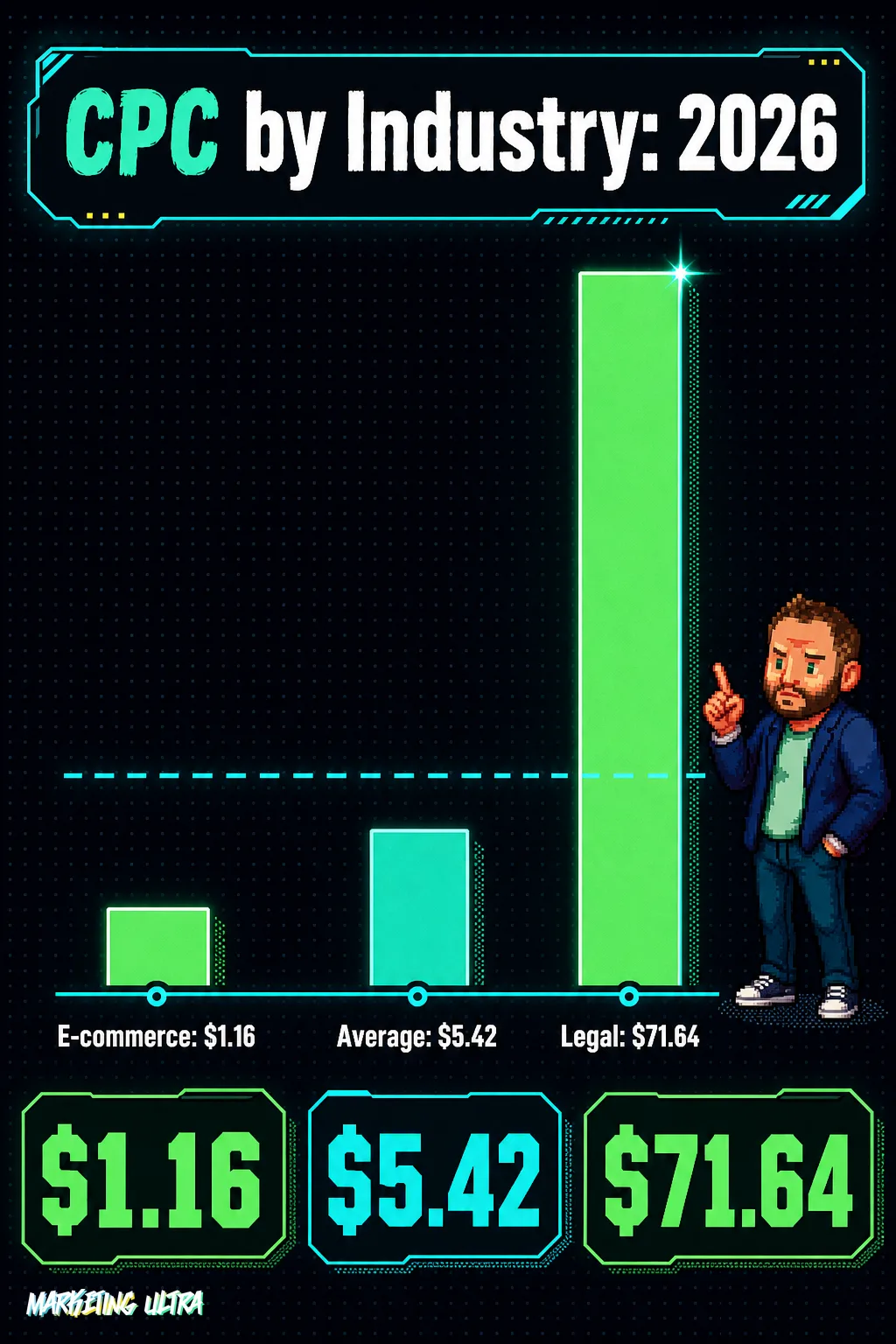
- Average CPC in 2026: $5.42 in search, but it swings wildly by industry, from $1.16 in ecommerce to over $70 in legal.
Google Ads by the Numbers in 2026
Google Ads controls 80% of the global PPC market and reaches 90% of internet users. More than 8 billion searches every day. Over 50% of users trust the ads they see in search results. This isn't just another channel. It IS the channel.
The average return is $2 for every $1 spent. Well-optimized campaigns can generate up to $8 per dollar invested; with full AI integration, reported ROI reaches 263%. The average search conversion rate hits 8.18%, compared to 2.35% for the global PPC average.
What about cost? The average search CPC sits at $5.42, with a cost per lead of $66.69. But those averages are misleading: if you sell shoes online, your CPC might land at $1.16. If you're a lawyer, open your wallet, up to $71.64 per click.
63% of clicks now come from mobile, and mobile ads are up to 5 times more effective than desktop. If your landing page doesn't load properly on a phone, you're torching two-thirds of your budget.
What the Averages Don't Tell You
Averages are the most dangerous stat in marketing. When you read "200% ROI," your brain translates that to: "if I put in $1,000, I get $2,000 back."
That's not how it works.
I'd bet the actual distribution of that ROI is bimodal: some accounts absolutely crush it, and others bleed money every single month. Very few live anywhere near the average. That 200% figure is the result of blending accounts with 800% returns and accounts that lose cash month after month.
So what separates the winners from the losers? It's not budget. It's not industry. It's that someone sits down every week to dig into the data, add negative keywords, check whether Smart Bidding is heading in the right direction, and ask themselves why that ad group converts on Thursdays but not on Mondays.
The stat I find most striking in the entire report: accounts with at least one negative keyword convert nearly 3 times more than those with none.
THREE times.
And adding negatives is the most basic thing you can do. It's free. It takes 10 minutes. Yet there are accounts that have been live for months without a single one.
Google Ads does its job. If you stop doing yours, don't blame the tool.
Does Google Ads AI Need a Human Co-Pilot?
Yes. AI Max came out of beta in April 2026 with 7% more conversions at a similar CPA, and Performance Max is already used by 71% of advertisers. Google Ads AI works. Just not on its own.

It optimizes bids and builds creatives with Asset Studio at a level that simply didn't exist five years ago. And audience targeting? It nails it. What it does NOT do is understand your business.
It doesn't know that your margin on product A is 60% and on product B it's 8%. It doesn't care that Friday night leads never close. And when your competitor slashes prices? The algorithm won't smell it coming.
No algorithm learns that.
Those nuances are what separate a campaign that "works according to Google" from one that works according to your actual P&L. As I cover in the complete Google Ads guide, the account manager who stays hands-on remains the one piece AI still can't replace.
Google Ads in 2026 is the best version it has ever been. More powerful, more automated. And that's exactly what makes it dangerous. Looking easy doesn't make it easy.
The data is spectacular. Nobody disputes that. But the same report that says "200% ROI" also says that a simple negative keyword list triples conversions. That tells you a lot about how many accounts are running on autopilot.
The $318 billion Google will bill this year has to come from somewhere. From accounts someone manages well. And from accounts nobody manages at all.
The question is: which one is yours?