YouTube has decided that playing a video for zero seconds counts as a view. Starting August 24, 2026, the public counter goes up the moment a video begins playing, with no minimum time threshold. View counts across every channel are about to rise. The content itself will stay exactly the same.

TL;DR: The No-Nonsense Summary
- New count: from August 24, YouTube counts a public view from the very first frame. No 30-second threshold.
- Historical data broken: the pre-change view series is not comparable to the new one. Document the cutoff or your reports are lying.
- Engaged views: the metric that actually measures real interest. Available in YouTube Analytics, Advanced Mode.
- Monetization unchanged: creator earnings and Partner Program eligibility are unaffected.
In this article
How YouTube Counts Views Starting August 2026
From August 24, 2026, YouTube counts a public view from the very first frame of playback, eliminating the 30-second threshold it previously applied to long-form videos, live streams and podcasts. The change brings the public count in line with the system YouTube Shorts has used since March 2025.
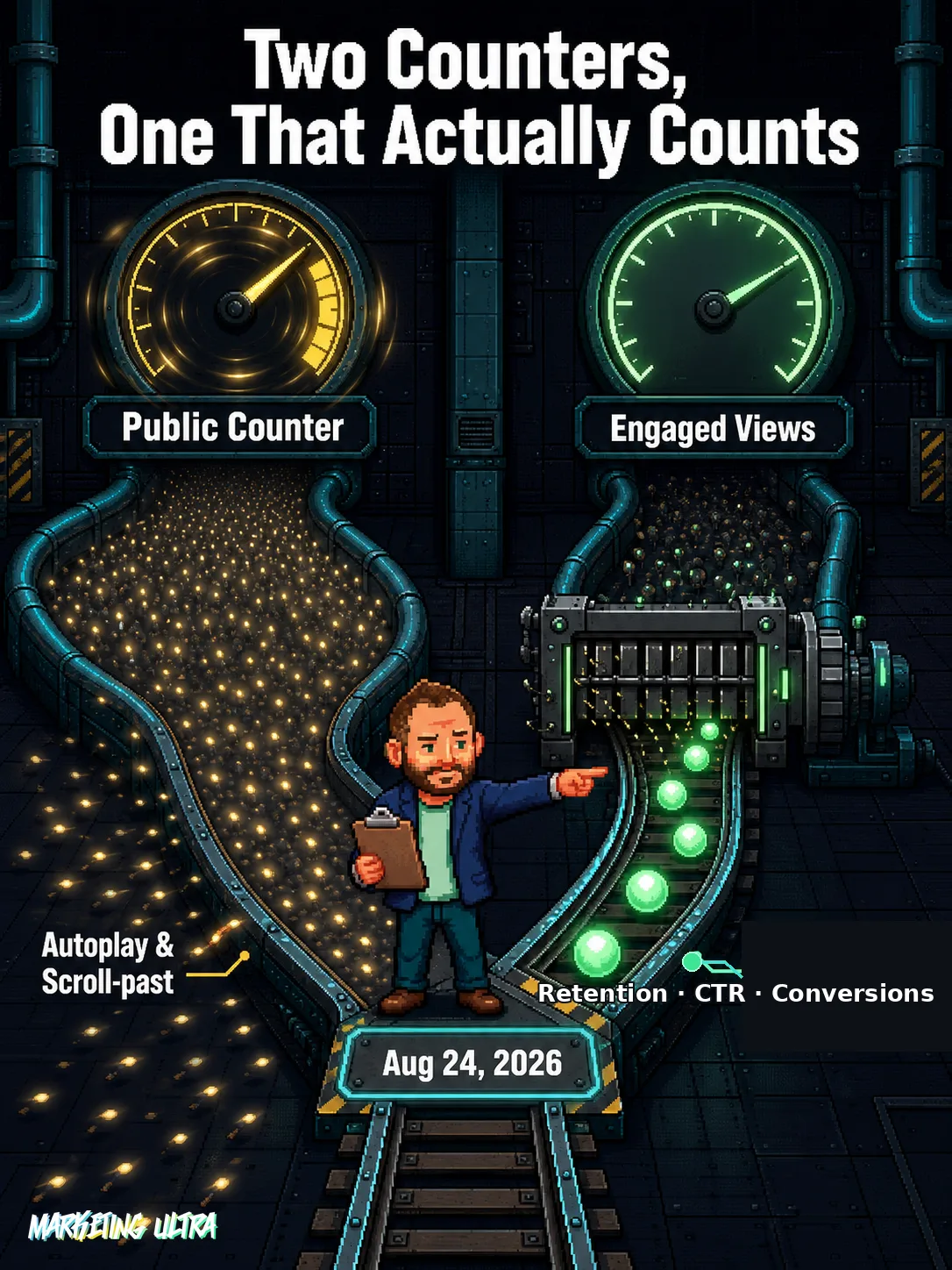
The official justification is "unifying metrics across formats" and aligning with TikTok and Instagram. The real translation: YouTube wants its numbers to be comparable with the competition. Since other platforms count from second zero, YouTube is lowering the bar to play in the same league.
The result? A video that previously needed 30 seconds of attention to rack up a view now counts the moment it appears on screen. You scroll past and it counts. It autoplays and it counts. In other words: easier for bots.
Your Historical Data Just Broke
If you use views as a performance KPI in your reports, you have a problem. From August 24, the numbers are going to spike with absolutely nothing changed in your content or strategy. An artificial jump in the historical series that, if left undocumented, will contaminate any analysis you run.
Picture this: you've been reporting 50,000 monthly views to your client for a year. In September you show them 85,000. Has the channel improved? No. Will they understand without context? Also no.
What you need to do is straightforward, but do it now: note the date of the change in your reports, establish a new baseline, and make clear that the public view series before August 24 is NOT comparable to the one after. Without that note, your September report is lying.
And watch out: this change is the perfect excuse for certain types to sell snake oil. Anyone showing you "spectacular growth" in September without mentioning the counting change either doesn't know what they're doing or is playing you for a fool.
Which YouTube Metrics Actually Measure Real Interest?
YouTube knows that inflating the public counter raises questions. That's why it's doubling down on the Engaged Views metric in YouTube Analytics, inside Advanced Mode. This metric keeps the old logic intact: the viewer has to actively choose to keep watching past the first few moments for it to count.
Your Engaged Views are now the metric that actually matters.
Beyond that, the metrics that genuinely tell you whether your content is working:
- Average retention: what percentage of your video the audience actually watches. A 40% retention rate on a 10-minute video is worth more than a million 2-second views.
- Impression CTR: how many people click after seeing your thumbnail. Measures genuine attraction, not autoplay.
- Attributed conversions: subscriptions, website visits, sales. What happens AFTER the video.
- Watch time: total hours remain the metric YouTube uses for monetization and the Partner Program.
Note: this change to the public count does not affect monetization or YouTube Partner Program eligibility. Creator earnings continue to be based on engaged views and qualified watch hours. If you're a creator, breathe easy, your revenue doesn't change.
What Changes for Your Paid YouTube Campaigns?
Cost per view (CPV) in campaigns based on the public metric changes its calculation base. But there's a nuance you need to be clear on: TrueView views, the ones Google Ads actually charges you for, have their own criteria. A TrueView ad still requires 30 seconds of viewing or an interaction to count as a billable view.

Google is not going to charge you for one-second views. But your channel's public report will show inflated figures that don't match what you're paying. Again, a client communication headache.
As I explain in the complete Google Ads guide, the key is separating vanity metrics from business metrics. This change only reinforces that need.
I'd wager that in the coming months we're going to see agencies and freelancers reporting "record results" on YouTube to clients who have no idea the counter changed its rules. The same old trick: when the metric works in your favor, you show it. When it doesn't, you bury it.
This is what every platform has done from day one: move the goalposts so the numbers always go up. TikTok counts from second zero. Instagram too. YouTube is joining the vanity metric club.
Why? Because the only thing platforms care about is the big shiny number they flash at advertisers, investors and the market. And who pays the price? You, with metrics that mean less and less, and clients obsessed with the big number.
From August 24, YouTube's counter tells you how many people walked past your video. How many actually stopped to watch it, that part's on you to find out.
Frequently Asked Questions About YouTube Views
What are YouTube TrueView views?
TrueView views are the billable views in Google Ads campaigns. They are recorded when a viewer watches at least 30 seconds of an ad (or the full ad if it's shorter) or interacts with it. This billing criteria does not change with the public counter update on August 24, 2026.
Does the new view count affect YouTube Shorts?
No. YouTube Shorts has counted views from the first frame since March 2025. The August 24 change applies exclusively to long-form videos, live streams and podcasts, which now align with the system Shorts has been using for over a year.