Meta has opened up the cupboard containing Astryx after using it as an internal design system for eight years. Now it wants to turn it into an open tool for people and AI assistants. On paper, it is a powerful component system for teams working with React 19. And it is still in beta. If your project lives outside that environment, you can stop reading here.

TL;DR: The No-Nonsense Summary
- What it offers: more than 150 accessible components, themes, templates and tools for building interfaces.
- Where it comes from: Meta says the system has been used internally for eight years and powers more than 13,000 applications.
- What it requires: React 19 or later, plus the Astryx and StyleX packages.
- The catch: it is still in beta, and the supplied documentation does not make it possible to verify how its MCP is configured.

DANIEL ESPINOSA RAMOS' TAKE
When it comes to Instagram and Meta, one eyebrow is always raised.
Dani
In this article
| What it is | Meta's React design system, with components and tools for agents. |
|---|---|
| Official website | https://astryx.atmeta.com/ |
| Repository | repo |
| License | MIT |
| GitHub stars | 31,359 |
| Launch year | 2026 |
| Maintained by | meta (organisation) |
| Requirements | React 19 or later; install Astryx and StyleX packages |
| Integrations | Next.js, Tailwind, Vite, CDN and AI assistants via CLI or MCP |
Reviewed on 2026-11-27
This tool is included in these collections: React UI Libraries and Components for Building Websites with AI
The Problem It Solves
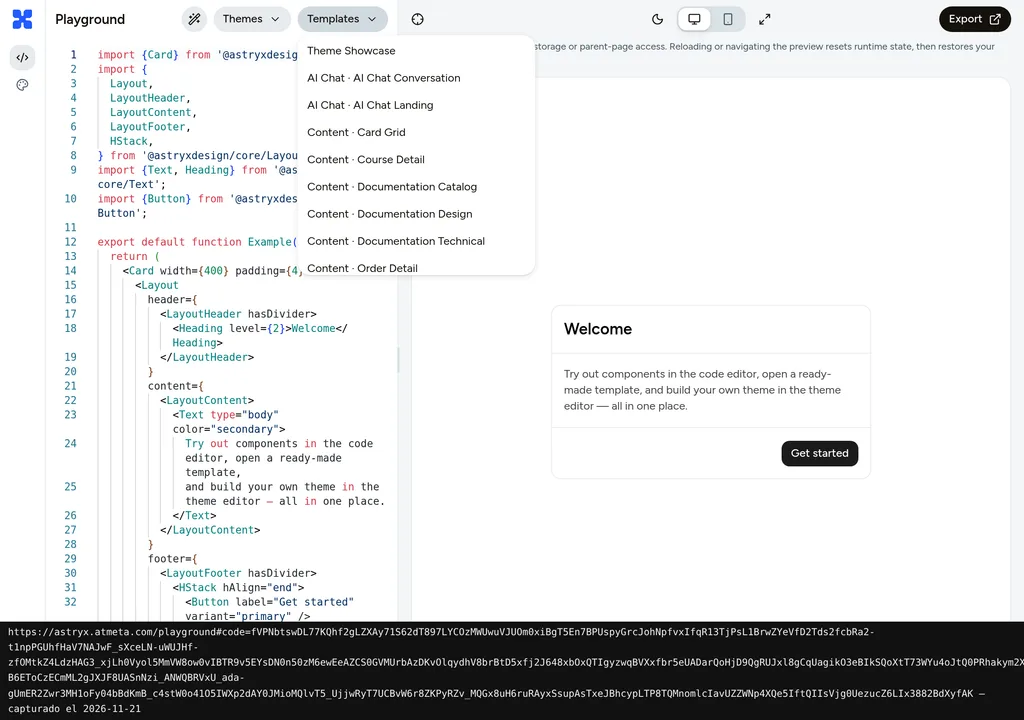
Meta's Astryx aims to stop every team from rebuilding buttons, forms, tables, navigation and styling from scratch. According to its official repository, it brings together more than 150 accessible components, customisable themes, dark mode, templates and a command-line tool.
There is a second layer: humans and coding assistants consult the same conventions and build with the same pieces. What happens when the assistant improvises the interface every time? You end up with a visual Frankenstein that works on Tuesday and falls apart on Thursday.
In plain English
It is a box of buttons, forms, tables and other ready-made pieces for building a website or app. You choose what you need, adapt it to the brand and put it where it belongs. That saves you from making every element from scratch, while the coding assistant stops inventing its own catalogue.
Getting Started
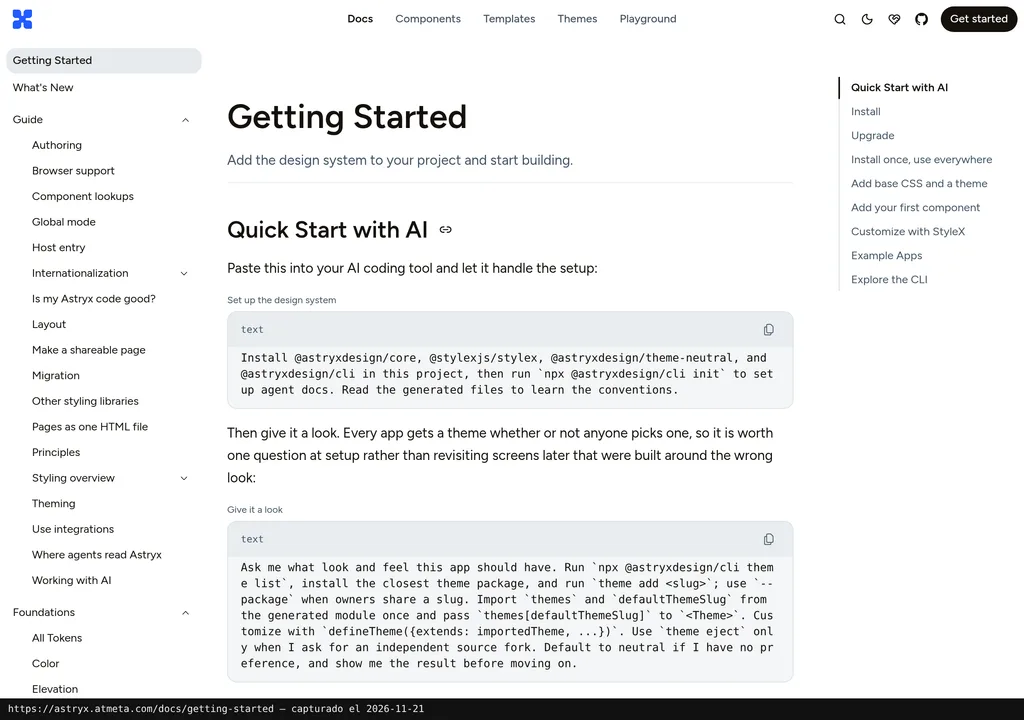
The first barrier is not a small one: Astryx requires React 19 or later. The official installation adds the core, a theme, StyleX and the command-line tool. Then an initialisation step stores Astryx instructions in the files assistants consult.
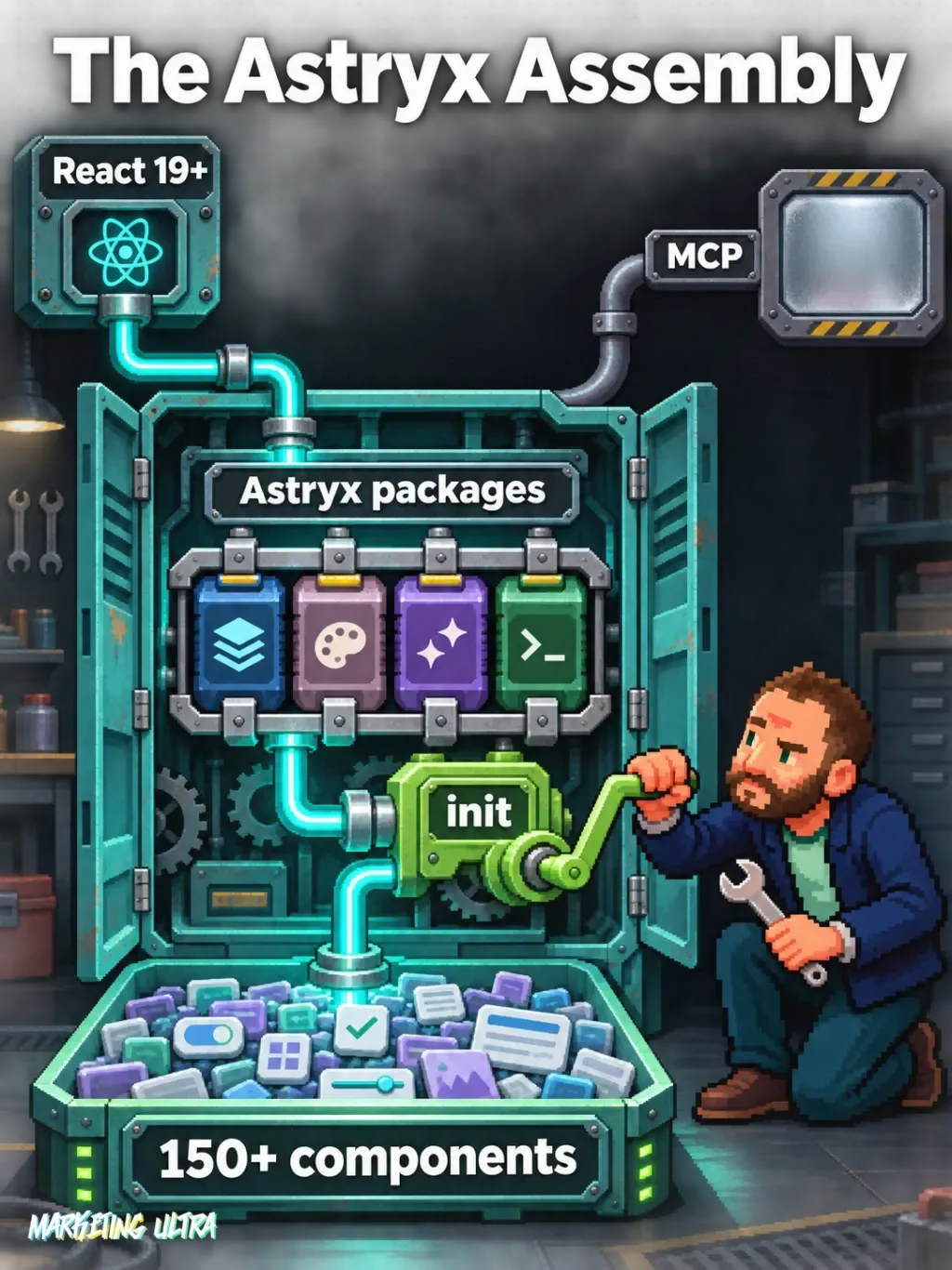
The documented process installs @astryxdesign/core, @astryxdesign/theme-neutral, @stylexjs/stylex and @astryxdesign/cli. You then run npx @astryxdesign/cli init. The project itself recommends adding a stable command in package.json to prevent path errors when it is called by a new person or an assistant.
A reproducible check, not my own test
The minimum check is to review the React version, install those packages, run init and request the component list with npm run astryx -- component --list. Note that these steps come from the documentation. I have not run that test. The material reviewed also does not include an official uninstall procedure, so I would save a separate change before initialising in order to roll back packages, imports and modified files.
MCP for Astryx de Meta
The official Astryx website says assistants can query components, templates and themes through its command-line tool or MCP. How exactly does that MCP connect? The dossier reviewed includes no server, command, address or configuration block.
The integration is officially announced. Based on the available evidence, its connection cannot be reproduced. I could make up a block for Claude Code or Cursor and it would look lovely for five minutes. Then the error arrives, of course.
Copy this and paste it into Claude Code, Cursor or your favourite coding assistant:
Check that the project uses React 19 or later and install Astryx following https://github.com/meta/astryx.
Run init and look for the exact MCP configuration at https://astryx.atmeta.com/; if it is not there, use only the command-line tool.
List the components and build a test page with a form, table and the neutral theme.
You do not need to master programming. The assistant can guide you through installation, configuration and testing, but you will need to review permissions, errors and technical decisions.
Using It in Real Marketing
Picture a small team that needs to build landing pages, internal dashboards or campaign forms. Every delivery should not turn into another argument about buttons and margins. With Astryx, I would start from shared components and themes while the assistant consults the project's conventions.
For the record: this is a reasonable scenario, not a proven result. The dossier includes no campaign, landing page or comparison run with timings and conversions. Based on what was reviewed, the value of a system like this lies in removing repeated decisions without destroying design judgement. Automation helps. Handing the whole brand to autopilot is another story.
It can also bring consistency to pages created by several people. But consistency does not mean commercial effectiveness. Astryx can give you a well-built table; it will not decide which value proposition deserves the hero spot. That headache is still human.
What They Do Not Tell You
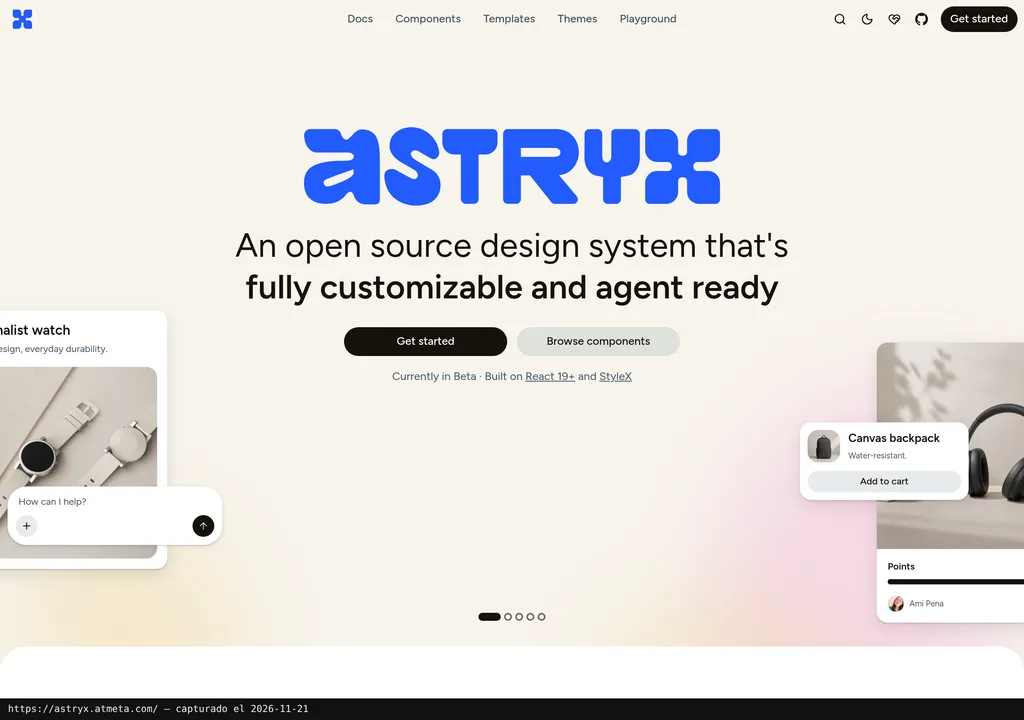
The first catch is written on the homepage: Astryx remains in beta. Its public figures do not quite line up either. The repository says more than 150 components, while the promotional website says more than 190. Are they using different criteria? Are they different versions? The documentation reviewed does not explain.
The second barrier is React 19. Forget about dropping Astryx on top of any website and carrying on. You can override styling with Tailwind, CSS modules or regular CSS, but the core remains tied to a specific technical environment.
The stated licence is MIT, but there is no official price in euros or verified commercial rate as of 21 November 2026. An open licence does not automatically make adaptation, maintenance, hosting or the coding assistant free. Mixing those up is fooling yourself.
There is also a lack of independent practical evidence. The repository had accumulated 31,359 stars when the dossier was reviewed. Plenty of attention, yes. A measure of quality, adoption or stability? Not a chance. Without a documented comparative test, I cannot claim Astryx speeds up a project versus the system you already have either.
What People Say
The Hacker News discussion found is minimal. One user questioned its popularity, noting that an earlier post had received 12 points and two comments. It is a valid objection for tempering enthusiasm, but such a small sample does not represent the community.
"From 5 months ago? (12 points, June, 2 comments) https://news.ycombinator.com/item?id=48665555 Doesn't seem to have been that popular" gnabgib on HN
"https://astryx.atmeta.com/" Fe2O3 on HN
In another Hacker News reply, someone only shared Astryx's official website, with no added experience or assessment. There is no social consensus to sell here: there is occasional interest and very little verifiable conversation.
Verdict
Meta's Astryx is worth watching if you work with React 19 and need designers, developers and assistants to use the same pieces. The claimed breadth of the catalogue, customisation and MIT licence make for a serious proposition.
I would not adopt it blindly in a critical project while it remains in beta and the MCP connection lacks a verifiable procedure in the sources reviewed. I would test it on an isolated screen first, compare the adaptation cost with the existing system and decide afterwards. Automation, yes. Blind faith because Meta is on the box? Not a chance.