Google has been taking the wheel away from you, inch by inch. Mandatory Smart Bidding, Performance Max swallowing up inventory, AI Max retiring DSAs. AI segmentation in Google Ads is no longer optional: it is the platform's operating system, and the only thing left to decide is whether you're driving or along for the ride.

TL;DR: The No-Fluff Takeaway
- Smart Bidding + DDA+: Google processes 70 million signals per auction. Manual bidding is ancient history.
- AI Max replaces DSAs: starting September 2026, AI decides which searches you show up for, well beyond your keyword list.
- ChatGPT for PPC vs. ChatGPT Ads: using ChatGPT as a support tool works. OpenAI's ad platform, with CTRs 7-10x lower than Google, is a completely different game.
- The hidden risk: more automation does not mean better performance if nobody is feeding the machine clean data and clear goals.
How Does AI Segmentation Work in Google Ads?
AI segmentation in Google Ads is the system that analyzes more than 70 million simultaneous signals, time of day, device, location, search history, conversion probability, to determine who sees your ad and how much to bid for each click. That is Smart Bidding with its DDA+ attribution model, and right now there is no real alternative inside the platform.
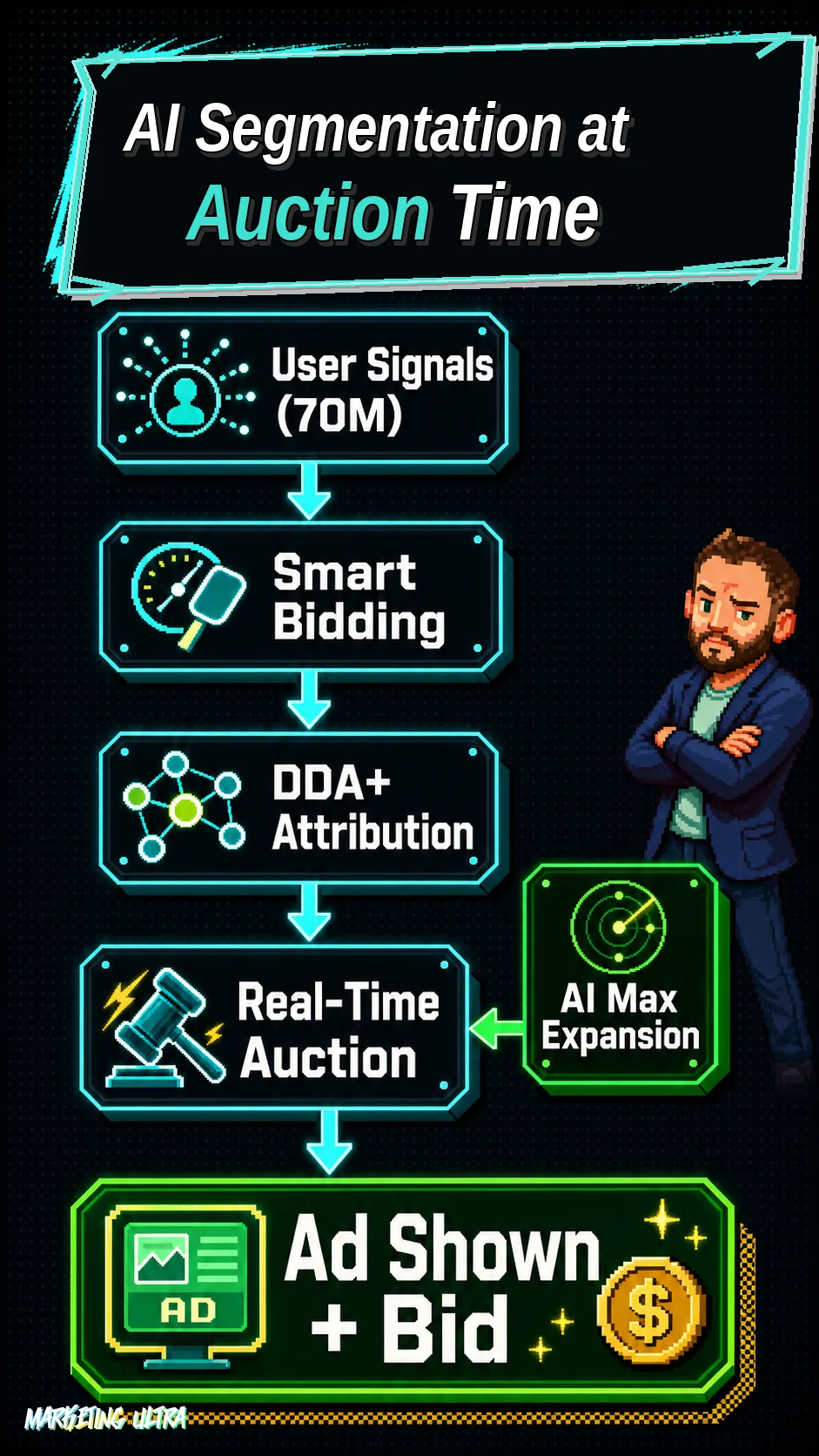
The biggest shift of 2026 is AI Max for Search. With the automatic DSA migration scheduled for September, Google is expanding keyword targeting with real-time intent signals. Translation: the machine decides which searches you appear for, regardless of what you have configured.
Custom Segments, audiences built from keywords, competitor URLs, and in-app behavior, and predictive audiences push this logic even further: they identify users before those users ever search for your product. If you want the full picture, it is all laid out in the complete Google Ads guide.
Powerful? Absolutely. Also a pretty serious black box.
The promise: you supply the data and the assets, the machine handles the rest. But "the rest" includes deciding how much you spend, when you show up, and in front of whom. Three years ago, those were your calls.
Can ChatGPT Actually Improve Your PPC Campaigns?
Yes. But there are two very different things getting deliberately mixed up in the market right now.
Using ChatGPT as a support tool for Google Ads works. Conversational keyword research, ad copy generation (50+ variations in five minutes), competitor headline analysis, negative keyword identification. 75% of PPC professionals already use AI to write ads, with reported CTR improvements of 2.3x and CPC reductions of 35% on AI-generated copy. Interesting numbers, though they depend heavily on the industry, the account, and what you actually do with that copy afterward.
A very different story are OpenAI's ChatGPT Ads. Launched in February 2026 for Free and Go users in the US, their targeting is not keyword-based, it runs on the user's conversation, chat history, and previous interactions. B2B CPCs range between $8 and $15; for e-commerce, between $3 and $6. And the number that actually matters: CTRs are 7 to 10 times lower than on Google Search.
OpenAI started testing CPA bidding in late May 2026, so they mean business. But with reach limited to free-tier users and inventory tied to chat volume, today it is more experiment than stable channel.
Worth testing? Yes, if you have budget to explore. Does it replace Google Ads? Not even close.
More AI Doesn't Mean Less Strategy
And this is where I will go out on a limb.
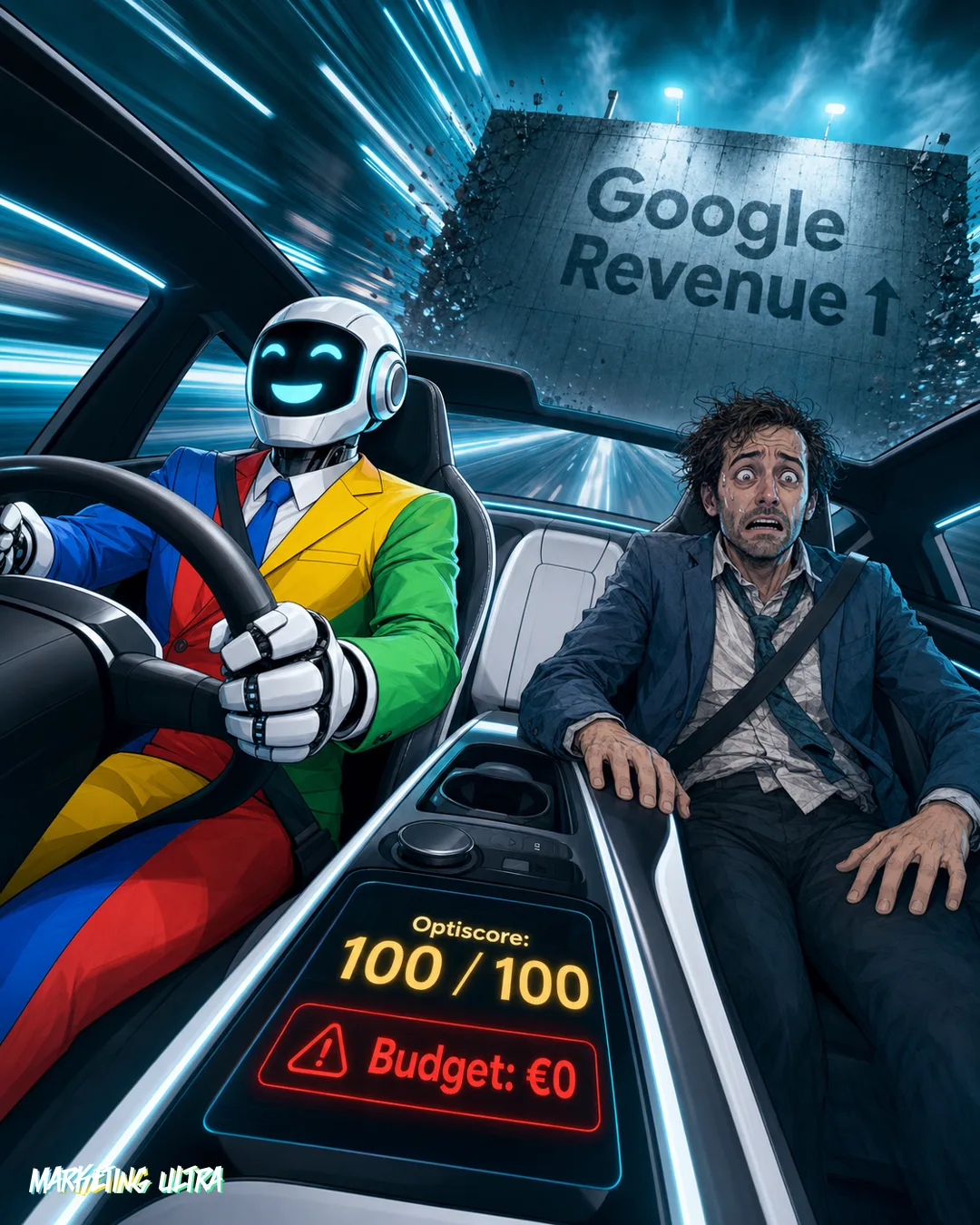
Google wants you to consolidate campaigns, feed Performance Max with every creative asset you own, and trust the system. They are partly right: AI performs better with more data and less fragmentation. AI-powered bid management reduces wasted spend by 37% and increases ROI by 50%. Brands that refresh their creative weekly see 28% higher ROAS.
But.
Those numbers assume a well-fed account. Clean first-party data, clear business objectives, and creatives that are not a Frankenstein patchwork. Plus a professional who can actually read what the machine is doing. There is a real difference between "AI segments for you" and "AI segments well for you." The gap is the person managing the account.
Most accounts struggling with Performance Max do not have an AI problem. They have a data problem: weak signals, misconfigured conversions, mediocre creative. The machine optimizes with what you give it. Give it garbage, and it will optimize garbage with remarkable efficiency.
And pay attention: every time Google nudges you toward consolidation and automation, it also nudges you further into dependency on its black box. Smart Bidding has changed the rules, but new rules do not mean Google is playing for your team. AI Overviews can reduce clicks by up to 34.5% across the SERPs. Fifteen percent of daily searches are entirely new, which means any static setup goes stale within hours. The landscape shifts, and the account manager who stops reviewing burns through budget.
The strategist who survives is not the one who clicks the most buttons, but the one who draws the clearest boundaries: what data goes in, which conversions count, what creative gets tested, and when the machine is getting too clever for its own good. Nobody automates that.
AI is the best co-pilot you will ever have in Google Ads. But a co-pilot does not choose the destination. Let go of the wheel and you will end up with a blown budget and a sparkling Optimization Score.
Which, conveniently, is exactly what Google wants.