Someone drops on LinkedIn that most static ads will be automated by end of year. 138 reactions, a three-layer framework, and a "huge shoutout" to the AI platform sponsoring the video. AI-driven creative automation in paid media is real, but this prediction has more marketing behind it than data.

TL;DR: The No-Fluff Summary
- Prediction without evidence: Dara Denney claims most static ads will be automated by 2026, but cites not a single report to back it up. It is a personal opinion amplified by a sponsorship deal.
- What the data actually says: McKinsey estimates 60-70% of marketing activities are automatable. Meta Advantage+ already generates hundreds of millions of variations per week. The trend is real; the timeline is debatable.
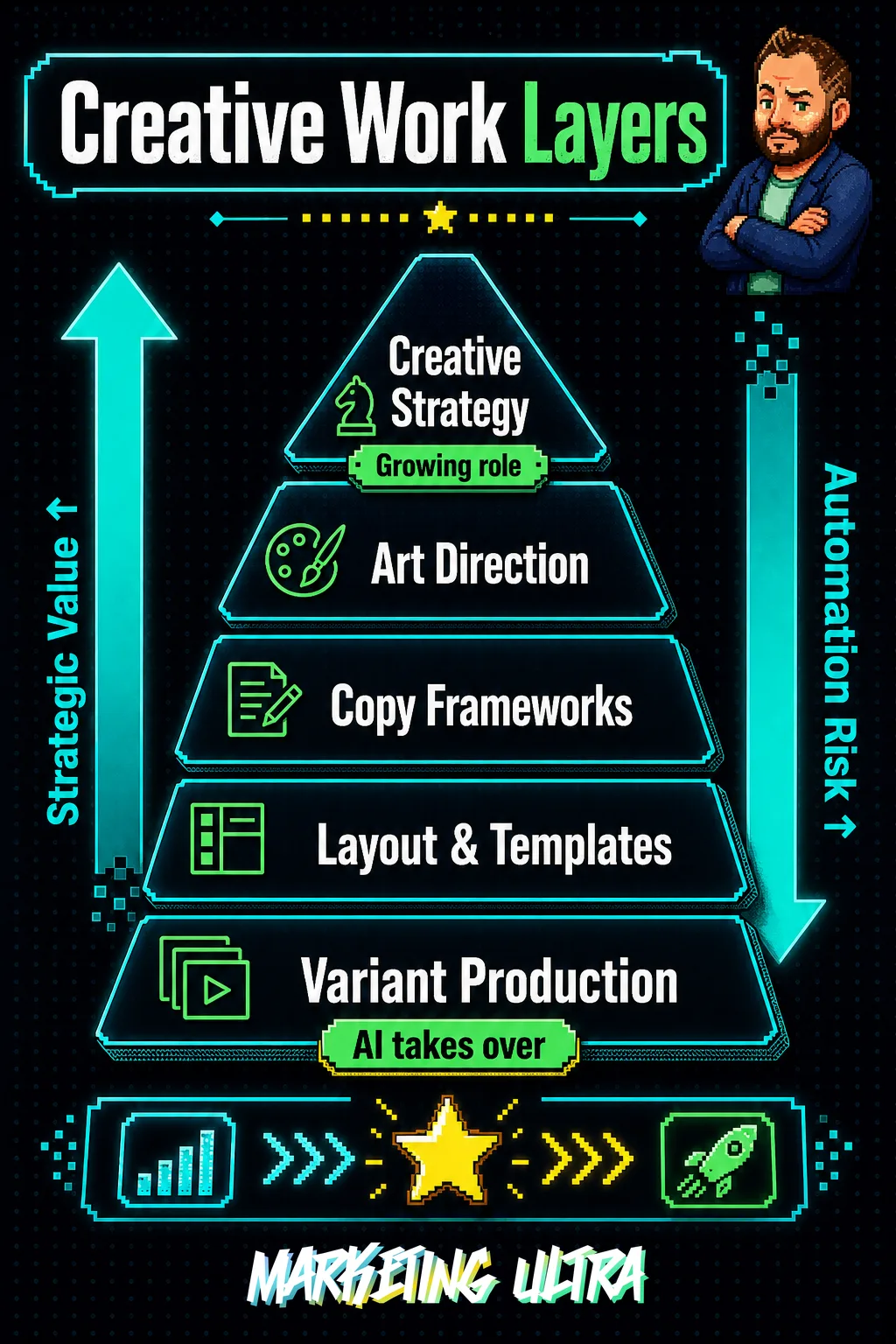
- The work shifts, it does not disappear: junior production roles, layout artists, variant builders, face the most exposure to automation. Creative strategy and art direction profiles are growing, according to the World Economic Forum.
- The silent risk: when everyone uses the same frameworks and the same tools, ads converge. The edge is not your prompt, it is your proprietary data.

There is no denying it: at this stage of the game, AI-generated creatives, especially static ads, have turned the industry upside down. AI already produces better static creatives than most human designers. That is a fact, at least in the majority of cases.
DaniWill Static Ads Be Automated in 2026?
Variant production, yes. The thinking behind them, no. That is the short answer.
Dara Denney, a creative strategist with serious weight in the DTC world, claims that "most static ads will be automated by the end of the year." That sounds definitive. The problem: she does not cite a single report, not Gartner, not Forrester, not McKinsey, not IAB. It is her prediction. Valid as an opinion, but delivered with the confidence of fact.
And the context? The piece is sponsored by Superscale AI, whom Dara explicitly thanks for automating the production of the video assets. When someone tells you everything is about to be automated while their automation sponsor rolls across the screen, alarm bells should go off.
What the data does say: McKinsey Global Institute estimated in 2023 that generative AI could automate between 60% and 70% of activities in marketing and sales. Gartner predicted that by 2025, 30% of outbound marketing messages from large organizations would be synthetically generated.
Meta Advantage+ Creative already generates hundreds of millions of ad variations per week. The trend is real. But "the trend is real" and "most ads will be automated by end of year" are very different statements.
The Three-Layer Framework: Useful Today, Expirable Tomorrow
The framework Dara proposes splits creative work into strategy, design, and copy. As a checklist for a paid media team, it works. One objective, one persona, one format, one funnel stage. Clear visual hierarchy, scannable in a second. No argument there.
The copy layer is where it gets interesting. Six tactics: specificity with real data, the taboo angle, primal desires, the curiosity gap, negative marketing, and the voice of the customer as social proof. Strong direct-response copywriting artillery.
The problem? All of that is pattern recognition. And patterns are exactly what a language model replicates best. If your competitive advantage is knowing these six tactics and applying them, that edge already lives in the training data of any LLM on the market.
The framework is useful for beginners. For the senior strategist, it is the floor. And the floor is what gets automated.
What Actually Changes for the Creative Strategist in Paid Media
The World Economic Forum's Future of Jobs 2025 report is unambiguous: junior creative production roles, layout artists, variant builders, are the most exposed to automation. Creative strategy and art direction profiles, on the other hand, are growing.
In plain terms: the person who built the static in Figma following a brief has a problem. The person who decided what to build and why does not.
The work mutates. You no longer produce the ad, you identify what converts and instruct the model on how to replicate it. Less creative labor, more output direction.
This is not new. Every time a tool automates execution, value moves up one rung toward strategy. It happened with programmatic buying. It happened with smart bidding in Google Ads. Now it is static ad production's turn, just moving faster this time.
The Risk Nobody Mentions: When Everyone Briefs the Same Way
Here is what is missing from these viral frameworks. When everyone uses the same three layers, the same six copy tactics, and the same generation tools, the output converges. Ads start looking alike. The creative moat disappears.
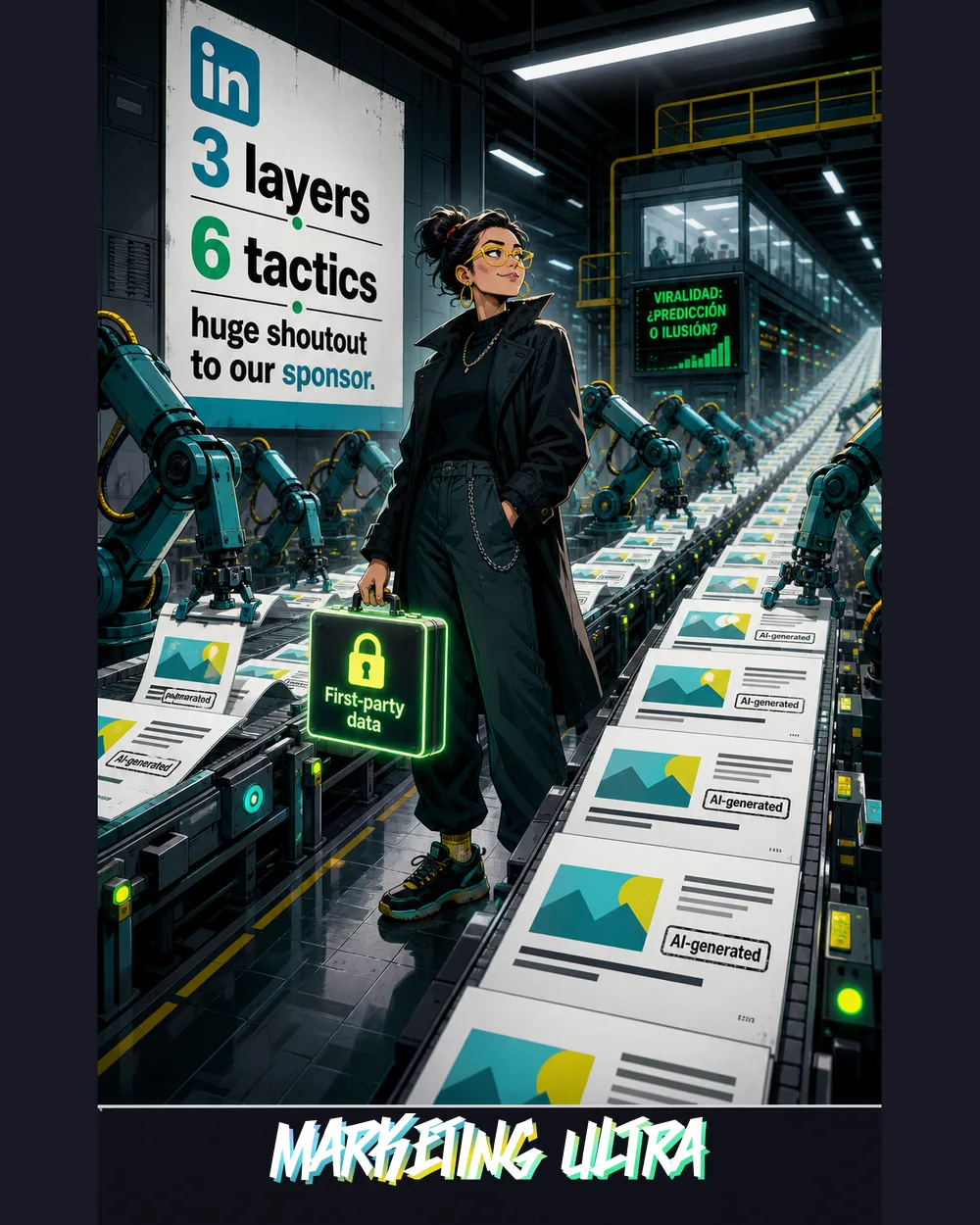
The real competitive advantage in paid media is not "knowing how to prompt" static ads. It is having proprietary data on what converts for your specific audience and product. That is what no generic framework gives you, and what no model can replicate without being fed your data.
It is the same issue that surfaces with generic marketing prompts: when everyone writes the same brief, everyone gets the same output. The prompt is not the magic. What you put inside it is.
There is another risk: using AI as cover for not thinking. "The AI does it" becomes the new "the intern handles it." If you do not understand why a static ad converts, it does not matter who produces it.
Dara gets the direction right. But dropping a sourceless prediction while your automation sponsor rolls in the credits smells more like a pitch than an analysis.
The question is no longer whether static ads get automated. It is whether you bring something to the table that a machine cannot copy from a LinkedIn framework.
FAQs About Static Ads and AI
What is the curiosity gap in advertising?
The curiosity gap is a copywriting technique that presents the problem or context without revealing the solution, compelling the user to click in order to get the full picture. In static ads, it shows up as headlines that open an implicit question and leave the answer for the landing page.
What is Meta Advantage+ Creative?
Advantage+ Creative is Meta's creative automation suite that generates and tests ad variations at scale. It processes hundreds of millions of variations per week, and Meta positions it as a tool to empower the strategist, not to replace them.