TikTok has just unveiled AI Likeness Detection, a beta tool designed to detect deepfakes and protect creators from unauthorized use of their face and voice. It looks good on paper. The catch: right now it only works for a handful of creators in the United States, with no launch date for Europe. Meanwhile, synthetic content using real people's likenesses keeps circulating with nothing to stop it.

TL;DR: The no-fluff summary
- AI Likeness Detection: TikTok's beta tool that flags AI-generated videos replicating a creator's face or voice without permission.
- US only: access is limited to a small group of creators. No confirmed launch date for the UK, EU, or anywhere outside the US.
- EU AI Act: already requires labeling of AI-generated content, regardless of what TikTok does with its own tool.
- Campaign impact: agencies working with creators need to lock down image rights and labeling protocols. Now.
What is TikTok's AI Likeness Detection?
AI Likeness Detection is a TikTok tool, currently in beta, that scans content on the platform to identify AI-generated videos replicating a creator's appearance or voice without their consent. As reported by The Verge, access is restricted to a small group of US-based creators.
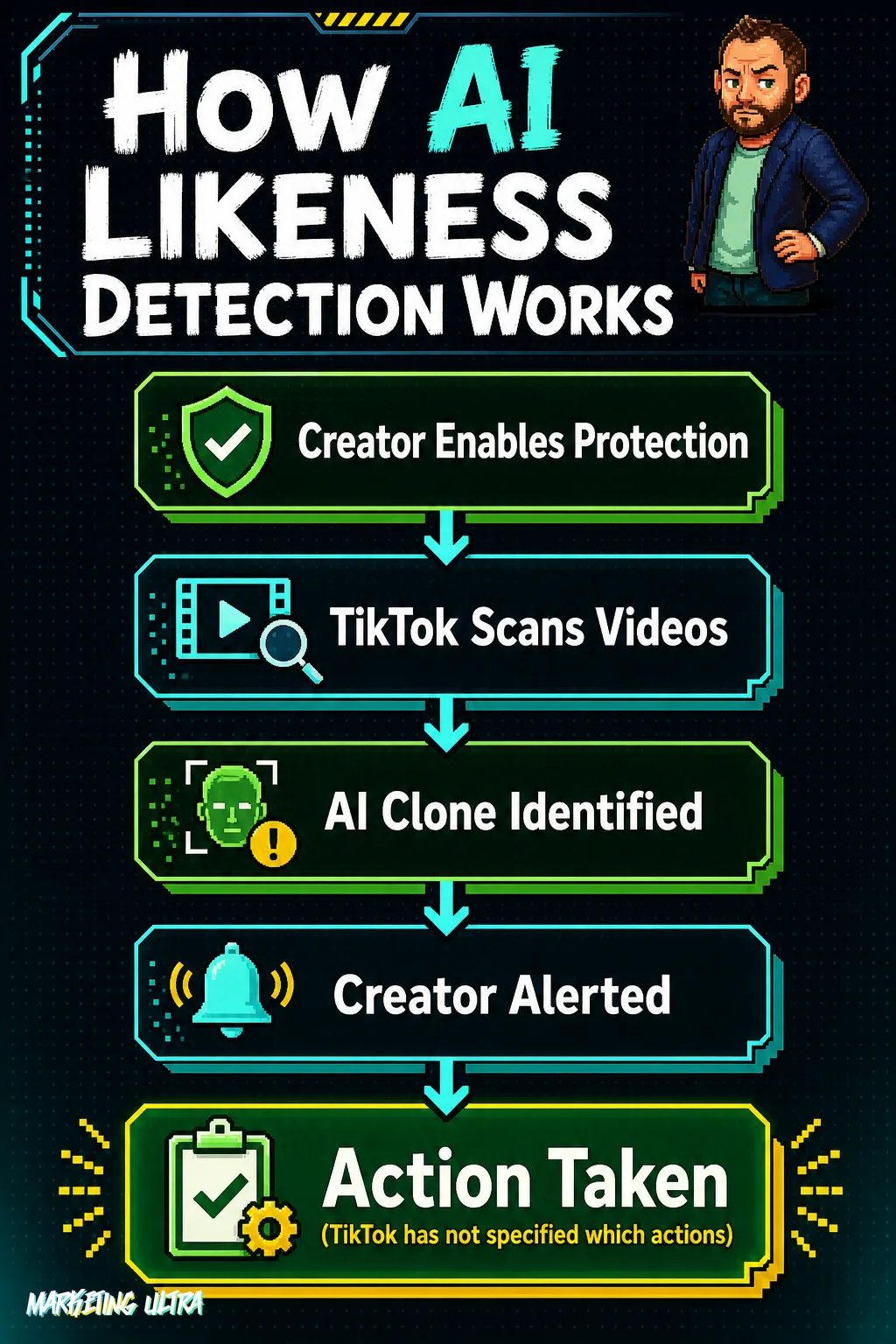
The mechanics are straightforward in theory: the creator enables the protection and the system scans videos published on TikTok. If it detects that someone has used AI to generate content with their face or voice without authorization, it alerts the creator or takes action, which specific actions, TikTok hasn't spelled out. A shield against deepfakes, the type of synthetic content that worries creators and regulators most right now.
Does it actually work? That remains to be seen. A beta with a small group in a single market proves nothing at scale. TikTok has mentioned a possible global rollout, but without concrete timelines or any commitment to Europe.
Availability (July 2026): AI Likeness Detection is in beta and only available to a limited group of creators in the United States. There is no confirmed launch date for the UK, Spain, or any EU or EEA country.
Why is TikTok launching a deepfake detector now?
Two clear reasons: regulatory pressure from Europe's AI Act, and the need to retain creators who are, at the end of the day, the asset that keeps the platform running.
Regulation comes first. The EU AI Act (Regulation 2024/1689) classifies deepfakes as content requiring mandatory transparency and traceability. Platforms that distribute AI-generated content without labeling it face serious penalties. TikTok knows that operating in Europe without detection tools is an open invitation for regulatory action. Launching the beta now, even if only in the US, lets the company present the project as a good-faith gesture to Brussels.
Then there's talent. Creator marketing moves billions, and creators are the primary asset. If an influencer discovers that someone cloned their face with AI to hawk dubious crypto schemes and the platform does nothing about it, they leave. And losing creators on TikTok means losing audiences, which means losing advertisers. The chain is short.
Altruism? Not even close. This is business dressed up as creator protection. But the fact that it's business doesn't make it useless.
There's another angle too: competition. Meta has already made moves with teen protection measures and its own plays in the generative AI space. If TikTok doesn't offer comparable protection, it loses ground. And in Europe, that fight is won in Brussels.
What does this change for brands and agencies running creator campaigns?
Any brand working with creators on TikTok will need to revisit how it manages image rights and the use of generative AI in its campaigns. And that applies whether the tool arrives or not.
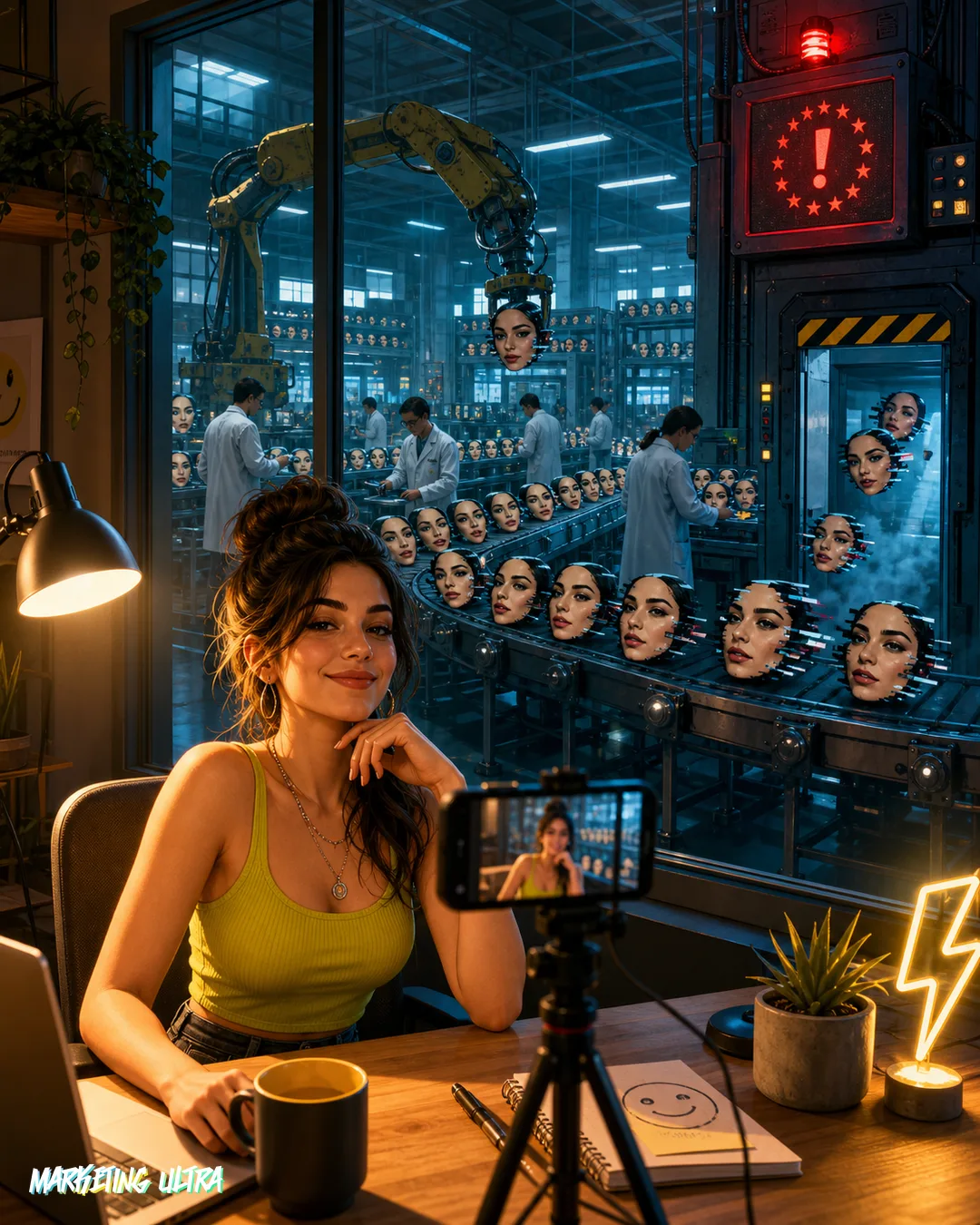
First scenario: AI Likeness Detection rolls out globally and works. Creators will have an official mechanism to detect unauthorized uses of their likeness. Brands that play by the rules, with clear contracts and properly defined rights, won't have a problem. Those that generate AI creatives based on a creator's appearance without explicit permission are going to have a serious problem.
Second scenario: the tool arrives late or not at all. This is where the real risk lies. Because EU regulation isn't waiting for TikTok to finish its beta. The AI Act requires transparency around AI-generated content, with or without platform-level tools. If your agency creates a video using a cloned influencer voice and publishes it without labeling, the liability is YOURS. Not TikTok's.
My bet is that the real impact won't be technical, detection will probably work halfway for quite some time. The actual blow is the deterrent effect. Simply having an official system to track deepfakes shifts the negotiation between brand and creator. "Do you have likeness protection enabled on TikTok?" is going to become a standard question in campaign prep. And any creator who doesn't have it turned on will raise eyebrows.
For agencies already managing TikTok advertising campaigns, this is one more headache on the list. Negotiating cost and deliverables isn't enough anymore. You need to ensure image rights are watertight and that any AI-generated content is properly labeled.
Across Europe? Wait and see. TikTok has given no dates for Europe and the tool is not available outside the United States. But the regulation is already here. Brands working with creators would do well to get ahead of it now: contracts that cover generative AI use, labeling protocols, and a direct conversation about how each creator's likeness will be used.
Deepfakes aren't a future problem. They're already here. TikTok has recognized that. Whether it executes in time is another question entirely.
Frequently asked questions about deepfake detection on TikTok
What exactly is a deepfake?
A deepfake is synthetic content (video, audio, or image) generated with artificial intelligence that replicates a real person's appearance, voice, or mannerisms to produce false material that looks authentic. The EU AI Act requires this type of content to carry mandatory labeling.
Does the AI Act require labeling for all AI-generated content?
Yes. EU Regulation 2024/1689 requires that content generated or manipulated with AI, depicting people, events, or scenarios that could be mistaken for reality, be clearly identified. This applies to platforms, advertisers, and any brand publishing synthetic content in the EU, regardless of what detection tools each platform offers.